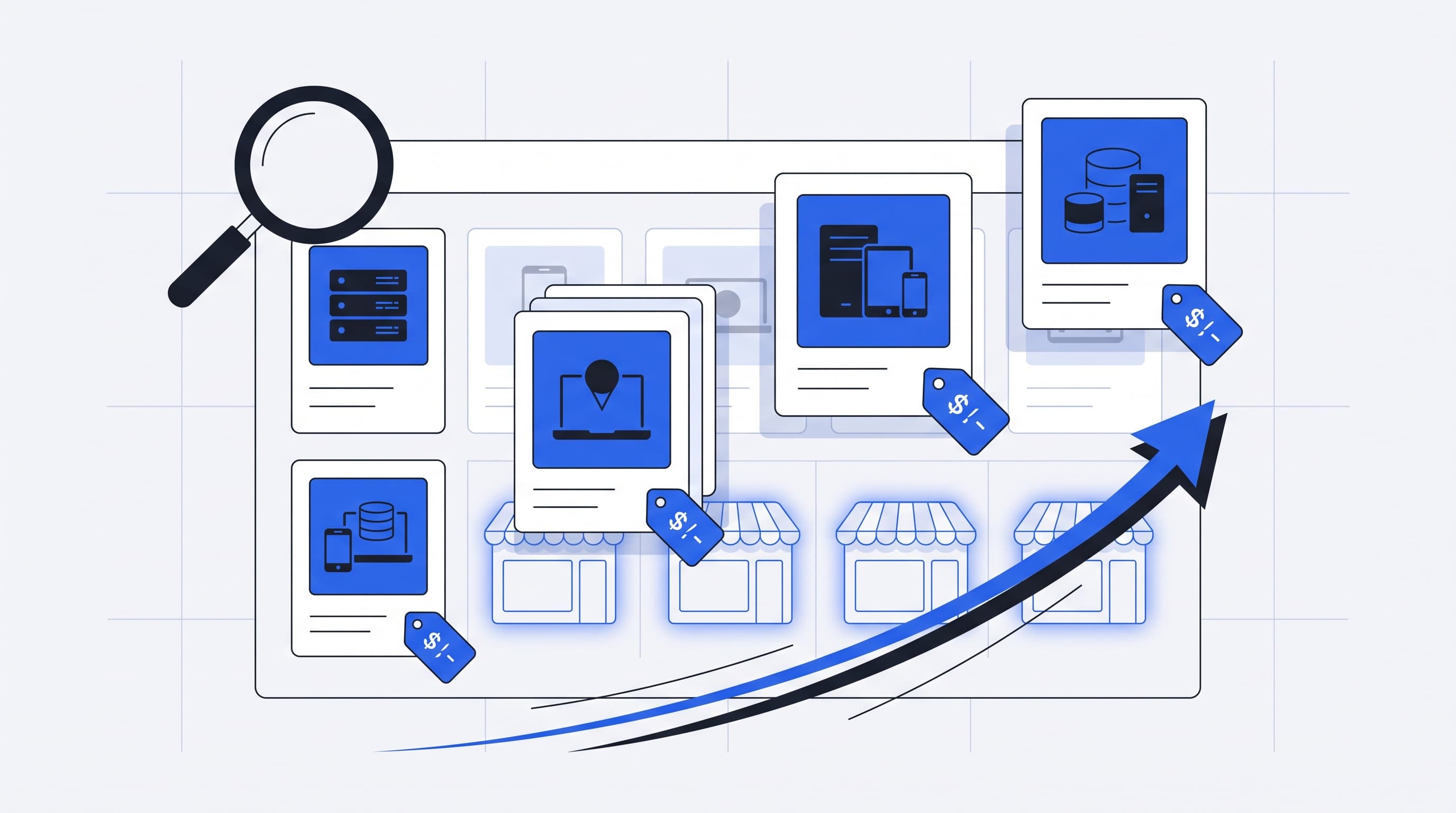
After years in which Croatian online retailers were largely limited to text-based Search ads on the domestic market, Google Shopping Ads are finally coming to Croatia.
For ecommerce businesses, this is not simply another ad format. Shopping changes how products appear in search results, how customers compare competing offers and which data Google uses to decide what to show. An image, product title, price and retailer can all appear before the click, moving an important part of the purchase decision directly onto Google.
That creates significant growth potential, but it will also make the market more transparent. Online stores will no longer compete only through ad copy and bids. They will compete through product data, pricing, availability, delivery terms, customer experience and, ultimately, their ability to turn demand into profitable sales.
When are Google Shopping Ads coming to Croatia?
According to the rollout information published in spring 2026, Croatia is part of the second wave of Google Shopping Ads expansion planned ahead of the 2026 holiday season. The same wave includes Bulgaria, Lithuania, Slovenia, Serbia, Bosnia and Herzegovina, Montenegro, Estonia and Latvia.
At the time of writing, Google has not publicly confirmed an exact launch date, the full language availability or how gradually access will be introduced across accounts. Croatian retailers should therefore avoid planning around a single assumed date. The more sensible approach is to complete the technical and operational groundwork early enough to be ready when the platform becomes available.
The direction, however, is clear. Ecommerce businesses in Croatia will gain access to an ad format that has been one of the main retail acquisition channels in more mature markets for years.
What are Google Shopping Ads?
Google Shopping Ads are visual ads for individual products. Depending on the placement and available features, they can show:
- a product image
- a product title
- the price
- the retailer name
- ratings, promotions, delivery or returns information
Unlike conventional Search ads, Shopping ads are not primarily created by writing ad copy and selecting keywords. As Google explains in its Shopping Ads documentation, the platform uses product data submitted through Google Merchant Center to match products with relevant searches.
This makes attributes such as the product title, category, brand, GTIN, price, availability and images both catalogue data and advertising inputs. Feed quality directly affects which searches a product may be eligible for and how relevant the resulting ad is.
Merchant Center therefore becomes the foundation for managing product data and preparing future Shopping campaigns, even for retailers that do not intend to launch campaigns on day one.
Why does Google Shopping matter for ecommerce in Croatia?
1. The product moves to the front of the search experience
With a text ad, customers usually see the specific product and its price only after clicking. A Shopping ad can show both immediately.
This matters most for high-intent searches, such as a customer looking for a particular television, trainer, perfume or home appliance model. Several relevant products and retailers can be compared directly in the search results before a website is opened.
The click is therefore more than a generic visit. Customers already know what the product looks like, who sells it and how much it costs. Google itself lists better-qualified traffic as one of the main benefits of the format because shoppers can make a more informed choice before visiting a store.
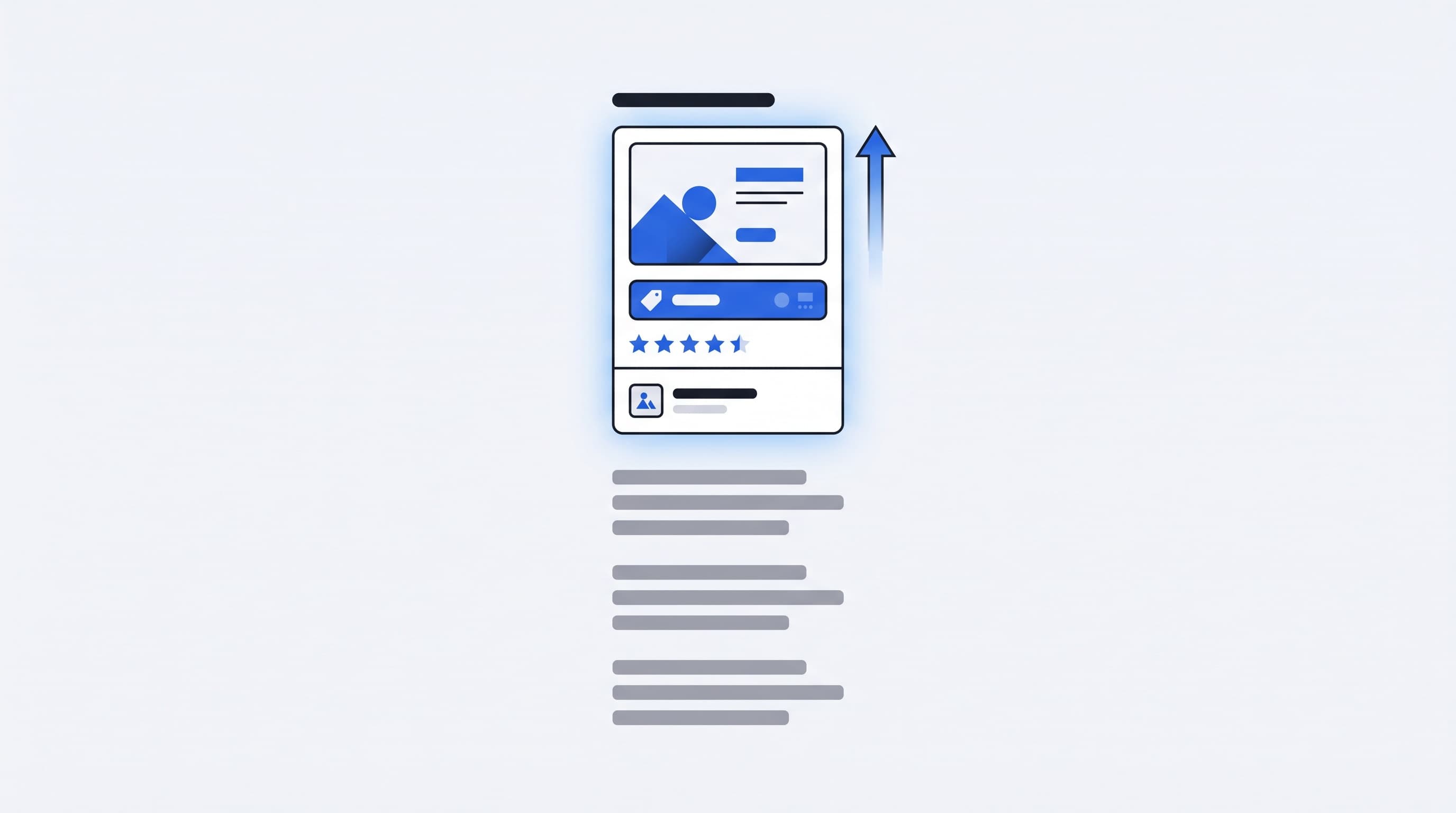
2. Google Ads gains a format built specifically for online retail
Until now, Croatian retailers have mainly captured active demand on Google through Search campaigns, while relying more heavily on Meta, display formats and other channels for visual product advertising.
Shopping brings together two valuable elements: a visual representation of the product and a person actively searching for something the retailer sells. This makes the format particularly relevant near the bottom of the purchase funnel, when customers are researching models, comparing prices or approaching a final decision.
3. The product feed becomes a critical marketing asset
Shopping is not a channel where retailers can export their catalogue once, connect it to Google and consider the job finished. The feed must be complete, accurate, current and structured around both the way customers search and the way Google understands products.
A title such as “Model 5482, blue” may work inside an internal catalogue, but it tells Google and the customer very little. A stronger title may include the brand, product type, model and the attributes that genuinely influence the search, such as colour, size, material or capacity. What belongs in the title depends on the category and on real search behaviour.
Consistency between the feed and the online store is equally important. If a price or availability value does not match the landing page, the product may be disapproved. Google’s product data specification defines the required and recommended attributes that retailers will need to maintain.
Poor product data will no longer be only an operational inconvenience. It will directly limit visibility and revenue.
4. Price comparison becomes faster and more visible
Shopping Ads make it easier to compare products and offers without opening several online stores. This will put greater pressure on retailers whose advantage depends mostly on a strong ad message or brand recognition.
The lowest price is not the only reason to click. Product imagery, ratings, promotions, delivery cost and speed, returns, retailer trust and the quality of the website all influence the decision. Nevertheless, ecommerce teams will need a much clearer view of where they are genuinely competitive and which products justify more aggressive investment.
This is why Shopping campaign management should not be separated from data on margin, stock, average order value, returns and fulfilment costs. A high ROAS does not necessarily mean high profitability if a campaign mainly sells low-margin products or generates expensive deliveries and frequent returns.
5. Smaller retailers gain a new opportunity, but no automatic advantage
Shopping gives smaller and more specialised retailers an opportunity to appear alongside much larger competitors. A relevant product, strong feed, competitive offer and good customer experience can earn visibility even without the same level of brand awareness.
The auction will, however, become more competitive as adoption grows. Early entry may provide a period with less saturation, more room to test and an earlier start in collecting campaign data. It does not guarantee lower CPCs or a stronger return. Results will depend on the category, number of advertisers, quality of the offer and campaign execution.
What can mature markets tell us?
Benchmarks from mature markets should not be presented as a forecast for Croatia. They do, however, demonstrate how important Shopping can become once both retailers and customers adopt the format at scale.
An Adthena analysis of 40 million ads found that in the first quarter of 2018, Shopping Ads already accounted for 76.4% of US retail search ad spend and generated 85.3% of clicks. In the UK, they represented 82% of spend and 87.9% of clicks. The figures are historical, but that is precisely why they are useful: they show how decisively retail search investment had already shifted from text to product ads in established markets.
Shopping has not stopped growing since then. Tinuiti’s Q1 2025 Digital Ads Benchmark Report found that clicks on Google Shopping formats, including Performance Max, increased 9% year over year among the advertisers in its dataset, while average CPC declined by 1%.
Google also reports that advertisers shifting from Standard Shopping to Performance Max generated an average 25% increase in conversion value at a similar ROAS. This is a platform benchmark, not a promise for an individual retailer, and Google itself recommends running an experiment to measure the actual incremental impact. The result nevertheless illustrates the potential value of combining a strong product feed, reliable measurement and automated campaign optimisation. Google provides the benchmark and testing guidance in its Performance Max retail best practices.
The point is not that every Croatian ecommerce business will reproduce these numbers. It is that Shopping is not a marginal extension of Search in mature markets. It is one of the primary ways retail advertisers compete for visibility and sales on Google.
Standard Shopping or Performance Max?
The arrival of Shopping Ads will also bring an important strategic decision: how should retailers activate their product inventory in Google Ads?
Standard Shopping gives advertisers more direct control over campaign structure, product groups, bids and search-term analysis. It can be useful when a team wants to understand demand in detail, test a tightly defined part of the catalogue or maintain stricter control over where budget is allocated.
Performance Max uses the same Merchant Center product data but extends delivery across Google inventory and relies more heavily on automation. The advertiser provides goals, budgets, conversion data, the product feed, creative assets and audience signals; Google’s system then optimises bids and placements toward the selected objective.
Neither campaign type can compensate for weak foundations. Automation becomes more useful when it receives accurate product data, meaningful conversion signals and enough volume to learn. If the feed is poor, transactions are duplicated or all products are treated as equally valuable despite very different margins, automation can simply scale the wrong outcome faster.
For many retailers, the best launch plan will not be a theoretical choice between “manual” and “AI”. It will be a controlled test in which campaign structure, measurement and commercial targets are defined before budget is scaled.
How can Croatian online retailers prepare?
Set up and review Google Merchant Center
Merchant Center connects the online store’s catalogue with Google. Retailers should verify the website, connect the relevant accounts, configure business information, shipping and returns, and review compliance with Google’s policies.
Opening an account is only the beginning. Teams need to monitor how many products are approved, which attributes are missing and what issues prevent products from being eligible.
Improve the product feed
At a minimum, retailers should review:
- clear and informative product titles
- accurate descriptions and categories
- brand, GTIN and MPN values where applicable
- high-quality primary and additional images
- current prices, sale prices and availability
- product variants such as size and colour
- shipping costs and delivery times
- returns information
- custom labels for commercial segmentation
Custom labels can be used to identify bestsellers, seasonal products, sale items, price tiers or margin groups. They do not help Google identify the product itself, but they can make campaign structure, budgeting and reporting much more closely aligned with business value.
Prepare accurate, localised product data
While the full language details have not yet been confirmed, retailers can already improve their Croatian product data and prepare localised feeds for other markets in which they operate.
Localisation should be more than technically correct translation. Product titles and descriptions need to reflect how customers in each market actually search. A literal or automated translation may satisfy the required format without producing the most relevant result.
Synchronise price and availability frequently
Google expects feed data to match the information customers see on the product page and during checkout. Retailers with frequent price or stock changes need an automated and sufficiently frequent update process.
This is a good moment to resolve issues that may not previously have been treated as marketing priorities: duplicate products, missing identifiers, inconsistent variants, outdated stock and unclear shipping rules.
Measure real business value
Shopping campaigns should drive sales, but transaction value alone is not always a sufficient optimisation signal. Before increasing investment, retailers should have reliable ecommerce measurement in Google Ads and GA4, including Enhanced Conversions, correct transaction values and currencies, and conversion deduplication.
For more advanced optimisation, marketing data should be connected with margin, returns, cancellations and new-customer value. Only then can a team distinguish between a campaign that reports high revenue and one that produces sustainable, profitable growth.
Improve product pages and checkout
Shopping may deliver more qualified traffic, but it cannot repair a slow website, weak mobile experience, incomplete product information or a complicated checkout.
A customer who has already compared offers on Google expects to land on the exact product, at the same price, with clear delivery and returns information. Any inconsistency reduces trust and makes it easier to continue to a competitor.
Define a test budget and success criteria
There is no need to activate the full catalogue on day one and immediately give an algorithm the entire budget. A better starting point is a selection of categories with sufficient demand, reliable stock, competitive pricing and margins that can support the acquisition cost.
The first test should answer specific questions: which products gain visibility, which searches generate sales, how Shopping affects existing Search activity, what share of customers are new and whether the campaign achieves the required margin after media, discounts, delivery and returns.
The businesses that prepare early will learn faster
The arrival of Google Shopping Ads in Croatia will not make every online store more successful. It will reward retailers that can combine clean product data, a competitive offer, reliable measurement, fast customer experience and disciplined campaign management.
That is why preparation should not begin on launch day. The most valuable work can be done now: auditing the catalogue, improving the feed, fixing measurement, segmenting products by commercial value and deciding what a successful test should actually prove.
Retailers that do this early will not only be able to launch faster. They will start with better inputs, learn from the market sooner and make more informed decisions before the auction becomes more crowded.
FAQ
When are Google Shopping Ads coming to Croatia?
According to rollout information published in spring 2026, Croatia is part of the second wave of the expansion planned ahead of the 2026 holiday season. Google has not publicly confirmed an exact launch date, so retailers should complete the groundwork early rather than plan around a single assumed date.
What are Google Shopping Ads?
Visual ads for individual products that can show an image, product title, price, retailer name, ratings and delivery information. They are matched to searches through product data submitted in Google Merchant Center rather than through keywords and ad copy.
Do retailers need Performance Max to run Shopping campaigns?
No. Standard Shopping offers more direct control over campaign structure, product groups and bids, while Performance Max uses the same Merchant Center product data with more automation across Google inventory. Neither campaign type compensates for weak product data or measurement.
How can Croatian online retailers prepare?
Set up and review Google Merchant Center, improve the product feed, synchronise price and availability, ensure reliable measurement in Google Ads and GA4, improve product pages and checkout, and define a test budget with clear success criteria.
Does early entry guarantee better results?
No. Early entry may provide less saturation and an earlier start in collecting campaign data, but it does not guarantee lower CPCs or a stronger return. Results depend on the category, the number of advertisers, the quality of the offer and campaign execution.
Keep reading: Google Performance Max: how it works and when it works against you